Buy ymy.eu ?
We are moving the project
ymy.eu .
Are you interested in purchasing the domain
ymy.eu ?
domain@kv-gmbh.de · 0541-91531010
Buy ymy.eu ?
How can digital signals be converted into analog signals?
Digital signals can be converted into analog signals through a process called digital-to-analog conversion (DAC). This conversion involves assigning specific voltage levels to represent the binary values of the digital signal. The DAC then reconstructs the continuous analog signal by converting these voltage levels back into a smooth waveform. This process is essential for devices like speakers and headphones to convert digital audio signals into sound waves that we can hear. **
Can someone explain to me what analog and digital signals are in technology?
Analog signals are continuous electrical signals that vary in amplitude and frequency, representing real-world phenomena such as sound or light. Digital signals, on the other hand, are discrete signals that represent data in binary form, either as a high or low voltage. In technology, analog signals are converted into digital signals through a process called analog-to-digital conversion, allowing for easier storage, transmission, and manipulation of data. Digital signals are more resilient to noise and distortion compared to analog signals, making them more commonly used in modern technology. **

Similar search terms for Signals
Top-Angebote
Products related to Signals:
-
Inspired Deals Smart Motorcycle Helmet LED Display With App Control, Custom RGB Graphics And Turn Signals 1500mAhStand out after dark while making your riding intentions easier for others to see. This app controlled helmet light 1500mah transforms your helmet into a customizable fullcolor display for text, graphics, riding speed, and directional arrows....64,97 $*Shipping: 0,00 $Secure redirect to the provider
-
Inspired Deals Dynamic LED Side Mirror Turn Signals For Fiat Ducato, Peugeot Boxer, Ram ProMaster 2006 2019 black ShellUpgrade your van with sharper signaling and a cleaner, more modern look. These dynamic LED side mirror turn signals deliver a flowing amber indication designed to make your turning intentions easier for surrounding drivers to notice. Made as Fiat...59,97 $*Shipping: 0,00 $Secure redirect to the provider
-
Yale University Press Mixed Signals: How Incentives Really Work by Uri Gneezy - Hardback Non Fiction Book - Behavioural Economics & Business Incentives Guide,Mixed Signals: How Incentives Really Work is a sharp, highly readable dive into why the incentives we design so often backfire. Behavioral economist Uri Gneezy unpacks the gap between what organizations say they want and what their reward systems actually encourage, using vivid, real-world case studies from business, healthcare, education, and everyday life. It's essential reading for managers, policymakers, parents, and anyone who has ever wondered why a well-intentioned reward scheme produced exactly the wrong result. Why does a CEO who preaches teamwork reward only individual achievement? Why does a hospital that champions patient care pay doctors for speed? Gneezy argues that every incentive sends a signal, and when that signal contradicts the stated goal, people respond to the signal, not the slogan. Drawing on decades of research in behavioral economics, this hardback published by Yale University Press explores the complexities of human motivation and organizational design.18,16 £*Shipping: 2,99 £Secure redirect to the provider
-
Magrathea Publishing The Anthology of Balaji: A Guide to Technology, Truth, and Building the FutureHow do you thrive in an unknown future? When you can’t see past the world we have now, look to visionaries like Balaji Srinivasan. His ideas show us how to build a healthier, brighter, and more technologically-advanced humanity. In The Anthology of Balaji: A Guide to Technology, Truth, and Building the Future, Eric Jorgenson curates a collection of Balaji’s wisdom from his entire career. In “Technology” you will see how technology shapes our world today and the ways it could shape our future. In “Truth” you learn how to think for yourself through the constant clamor of information and media. Finally, in “Building the Future,” you will learn how to wield Technology and Truth to change your life, change your community, and—maybe—change the future of our species. This guide will help you pick the next great investment, start a billion-dollar company, or even a new country. The Anthology of Balaji helps you visualize and build your brightest future.5,95 £*Shipping: 2,99 £Secure redirect to the provider



-
What is the difference between analog and digital signals?
Analog signals are continuous waveforms that vary in amplitude and frequency, while digital signals are discrete signals that represent data as a sequence of binary numbers (0s and 1s). Analog signals are susceptible to noise and distortion, whereas digital signals are less prone to interference and can be easily processed and transmitted without loss of quality. Analog signals are used in older technologies like vinyl records and analog phones, while digital signals are used in modern technologies like smartphones, computers, and digital cameras. **
-
What is the principle of converting a waveform into digital signals?
The principle of converting a waveform into digital signals involves sampling the analog waveform at regular intervals to capture its amplitude at each point in time. This process is known as analog-to-digital conversion. The amplitude values are then quantized into discrete levels and encoded into binary digits, representing the digital signal. This conversion allows for the storage, processing, and transmission of the waveform in digital form, enabling more efficient manipulation and reproduction of the original analog signal. **
-
Am I receiving digital or analog signals on my Philips TV?
You are receiving digital signals on your Philips TV. Philips TVs are designed to receive digital signals, which provide higher quality audio and video compared to analog signals. Digital signals also allow for more channels and interactive features on your TV. **
-
Do I receive digital or analog signals on my Philips television?
Philips televisions receive digital signals. Most modern televisions, including Philips models, are equipped with digital tuners that allow them to receive digital broadcasts over-the-air or through a cable or satellite provider. This means that you can enjoy high-definition picture quality and access to digital channels without the need for a separate digital converter box. **


Where and how does a PC convert code into digital signals?
A PC converts code into digital signals within its central processing unit (CPU). The CPU contains an arithmetic logic unit (ALU) and a control unit, which work together to execute instructions and perform calculations. When the CPU receives code, the control unit decodes the instructions and sends signals to the ALU to perform the necessary operations. The ALU then processes the code and generates digital signals based on the instructions, which are then transmitted through the computer's internal buses to various components such as the memory, storage devices, and input/output devices. **
Can someone explain the difference between digital and analog signals to me?
Digital signals are discrete, representing data as a series of on/off states (1s and 0s), while analog signals are continuous, representing data as a range of values. Digital signals are more resistant to noise and distortion, making them more reliable for long-distance transmission, whereas analog signals are more susceptible to interference. Digital signals are also easier to store, manipulate, and process using computers, while analog signals require specialized equipment for processing. **
Top-Angebote
Products related to Signals:
-
Tools, Home & Hobby Heated Towing Mirrors For Chevy Silverado 2003 To 2007 GMC Sierra With Turn Signals Heated Towing Mirrors For Chevy Silverado 2003 To 2007 GMC Sierra With Turn SignalsTow with greater confidence and keep a clearer view of the road behind you. These towing mirrors are designed for compatible Chevy, GMC, and Cadillac vehicles, giving drivers improved visibility when towing trailers or navigating busy roads....369,97 $*Shipping: 0,00 $Secure redirect to the provider
-
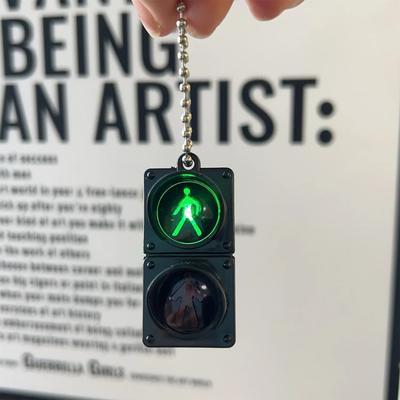
Useful Little Things Mini LED Traffic Light Keychain Electronic Pedestrian Signal Toy Pendant crosswalk SignalsA Fun and Educational Traffic Signal Keychain Bring the excitement of city traffic signals wherever you go with this Mini LED Traffic Light Keychain. Designed to resemble a real pedestrian crossing signal, this compact electronic toy features bright...34,97 $*Shipping: 0,00 $Secure redirect to the provider
-
Inspired Deals Smart Motorcycle Helmet LED Display With App Control, Custom RGB Graphics And Turn Signals 1500mAhStand out after dark while making your riding intentions easier for others to see. This app controlled helmet light 1500mah transforms your helmet into a customizable fullcolor display for text, graphics, riding speed, and directional arrows....64,97 $*Shipping: 0,00 $Secure redirect to the provider
-
Inspired Deals Dynamic LED Side Mirror Turn Signals For Fiat Ducato, Peugeot Boxer, Ram ProMaster 2006 2019 black ShellUpgrade your van with sharper signaling and a cleaner, more modern look. These dynamic LED side mirror turn signals deliver a flowing amber indication designed to make your turning intentions easier for surrounding drivers to notice. Made as Fiat...59,97 $*Shipping: 0,00 $Secure redirect to the provider
-
How can digital signals be converted into analog signals?
Digital signals can be converted into analog signals through a process called digital-to-analog conversion (DAC). This conversion involves assigning specific voltage levels to represent the binary values of the digital signal. The DAC then reconstructs the continuous analog signal by converting these voltage levels back into a smooth waveform. This process is essential for devices like speakers and headphones to convert digital audio signals into sound waves that we can hear. **
-
Can someone explain to me what analog and digital signals are in technology?
Analog signals are continuous electrical signals that vary in amplitude and frequency, representing real-world phenomena such as sound or light. Digital signals, on the other hand, are discrete signals that represent data in binary form, either as a high or low voltage. In technology, analog signals are converted into digital signals through a process called analog-to-digital conversion, allowing for easier storage, transmission, and manipulation of data. Digital signals are more resilient to noise and distortion compared to analog signals, making them more commonly used in modern technology. **
-
What is the difference between analog and digital signals?
Analog signals are continuous waveforms that vary in amplitude and frequency, while digital signals are discrete signals that represent data as a sequence of binary numbers (0s and 1s). Analog signals are susceptible to noise and distortion, whereas digital signals are less prone to interference and can be easily processed and transmitted without loss of quality. Analog signals are used in older technologies like vinyl records and analog phones, while digital signals are used in modern technologies like smartphones, computers, and digital cameras. **
-
What is the principle of converting a waveform into digital signals?
The principle of converting a waveform into digital signals involves sampling the analog waveform at regular intervals to capture its amplitude at each point in time. This process is known as analog-to-digital conversion. The amplitude values are then quantized into discrete levels and encoded into binary digits, representing the digital signal. This conversion allows for the storage, processing, and transmission of the waveform in digital form, enabling more efficient manipulation and reproduction of the original analog signal. **
Similar search terms for Signals
-
Yale University Press Mixed Signals: How Incentives Really Work by Uri Gneezy - Hardback Non Fiction Book - Behavioural Economics & Business Incentives Guide,Mixed Signals: How Incentives Really Work is a sharp, highly readable dive into why the incentives we design so often backfire. Behavioral economist Uri Gneezy unpacks the gap between what organizations say they want and what their reward systems actually encourage, using vivid, real-world case studies from business, healthcare, education, and everyday life. It's essential reading for managers, policymakers, parents, and anyone who has ever wondered why a well-intentioned reward scheme produced exactly the wrong result. Why does a CEO who preaches teamwork reward only individual achievement? Why does a hospital that champions patient care pay doctors for speed? Gneezy argues that every incentive sends a signal, and when that signal contradicts the stated goal, people respond to the signal, not the slogan. Drawing on decades of research in behavioral economics, this hardback published by Yale University Press explores the complexities of human motivation and organizational design.18,16 £*Shipping: 2,99 £Secure redirect to the provider
-
Magrathea Publishing The Anthology of Balaji: A Guide to Technology, Truth, and Building the FutureHow do you thrive in an unknown future? When you can’t see past the world we have now, look to visionaries like Balaji Srinivasan. His ideas show us how to build a healthier, brighter, and more technologically-advanced humanity. In The Anthology of Balaji: A Guide to Technology, Truth, and Building the Future, Eric Jorgenson curates a collection of Balaji’s wisdom from his entire career. In “Technology” you will see how technology shapes our world today and the ways it could shape our future. In “Truth” you learn how to think for yourself through the constant clamor of information and media. Finally, in “Building the Future,” you will learn how to wield Technology and Truth to change your life, change your community, and—maybe—change the future of our species. This guide will help you pick the next great investment, start a billion-dollar company, or even a new country. The Anthology of Balaji helps you visualize and build your brightest future.5,95 £*Shipping: 2,99 £Secure redirect to the provider
-
Inspired Deals Disney Bitzee Digital Pet Carrying Case, Hard Shell Storage Organizer For Interactive Virtual Pets Travel Safe Disney Bitzee Digital Pet Carrying Case, Hard Shell Storage Organizer For Interactive Virtual Pets Travel SafeFall in love with keeping your childs favorite digital companion safe and ready for every adventure. This digital pet storage case is thoughtfully designed for Bitzee and similar interactive toys, giving parents peace of mind and kids the freedom to...39,97 $*Shipping: 0,00 $Secure redirect to the provider
-
Uplift Essentials Virtual Motion Ocean Aquarium Lamp Virtual Motion Ocean Aquarium Lamp"Experience the tranquil beauty of the deep blue without the maintenance of a real tank with the Virtual Motion Ocean Aquarium Lamp. This creative decorative piece uses highdefinition ""moving picture"" technology to simulate a vibrant tropical reef,..."79,97 $*Shipping: 0,00 $Secure redirect to the provider
-
Am I receiving digital or analog signals on my Philips TV?
You are receiving digital signals on your Philips TV. Philips TVs are designed to receive digital signals, which provide higher quality audio and video compared to analog signals. Digital signals also allow for more channels and interactive features on your TV. **
-
Do I receive digital or analog signals on my Philips television?
Philips televisions receive digital signals. Most modern televisions, including Philips models, are equipped with digital tuners that allow them to receive digital broadcasts over-the-air or through a cable or satellite provider. This means that you can enjoy high-definition picture quality and access to digital channels without the need for a separate digital converter box. **
-
Where and how does a PC convert code into digital signals?
A PC converts code into digital signals within its central processing unit (CPU). The CPU contains an arithmetic logic unit (ALU) and a control unit, which work together to execute instructions and perform calculations. When the CPU receives code, the control unit decodes the instructions and sends signals to the ALU to perform the necessary operations. The ALU then processes the code and generates digital signals based on the instructions, which are then transmitted through the computer's internal buses to various components such as the memory, storage devices, and input/output devices. **
-
Can someone explain the difference between digital and analog signals to me?
Digital signals are discrete, representing data as a series of on/off states (1s and 0s), while analog signals are continuous, representing data as a range of values. Digital signals are more resistant to noise and distortion, making them more reliable for long-distance transmission, whereas analog signals are more susceptible to interference. Digital signals are also easier to store, manipulate, and process using computers, while analog signals require specialized equipment for processing. **
* All prices are inclusive of VAT and, if applicable, plus shipping costs. The offer information is based on the details provided by the respective shop and is updated through automated processes. Real-time updates do not occur, so deviations can occur in individual cases. ** Note: Parts of this content were created by AI.