Buy ymy.eu ?
We are moving the project
ymy.eu .
Are you interested in purchasing the domain
ymy.eu ?
domain@kv-gmbh.de · 0541-91531010
Buy ymy.eu ?
Were Neanderthals smarter or dumber than modern humans?
It is difficult to definitively say whether Neanderthals were smarter or dumber than modern humans. Neanderthals had larger brains than modern humans, which could suggest they had comparable or even superior cognitive abilities. However, modern humans had more advanced tools, art, and social structures, indicating a higher level of cognitive complexity. Overall, it is more accurate to say that Neanderthals had different cognitive abilities suited to their environment, rather than being inherently smarter or dumber than modern humans. **
Could Neanderthals speak?
There is ongoing debate among scientists about whether Neanderthals had the ability to speak. Some researchers believe that Neanderthals had the physical capability for speech based on the structure of their vocal tract, while others argue that there is not enough evidence to definitively prove they had a complex language like modern humans. Recent studies suggest that Neanderthals may have had the capacity for some form of vocal communication, but the extent and complexity of their language abilities remain uncertain. **

Similar search terms for Neanderthals
Top-Angebote
Products related to Neanderthals:
-
Microsoft System Center Virtual Machine Endpoint Configuration Manager GLOBALSystem Center Virtual Machine Endpoint Configuration Manager (SCVMM and SCCM for short) is actually a combination of two separate tools from Microsoft's System Center suite, used for managing virtualized environments and deploying/managing devices. Here's a breakdown: System Center Virtual Machine Manager (SCVMM): This tool focuses on managing virtual machines (VMs) within your datacenter. It allows you to: Provision and deploy VMs: Create new VMs, configure them, and deploy them to your chosen hypervisor (like Hyper-V or VMware). Manage VM lifecycle: Perform operations like starting, stopping, migrating, and cloning VMs. Automate VM tasks: Set up automated workflows for VM provisioning, deployment, and management. Monitor VM health: Keep track of VM performance and resource usage. Microsoft Endpoint Configuration Manager (SCCM): This tool, now part of the Endpoint Manager suite, focuses on managing devices (desktops, laptops, servers) on your network. It allows you to: Deploy operating systems and applications: Remotely install Windows or other OSes and applications on your devices. Patch management: Automatically deploy security patches and updates to keep your devices secure. Inventory and asset management: Track hardware and software inventory across your devices. Remote control: Access and control devices remotely for troubleshooting purposes. While they are separate tools, they can be used together for a more comprehensive management solution. For instance, you can use SCVMM to provision and deploy VMs with SCCM pre-installed for easier device management. Here are some additional points to consider: Combined Name: Since SCCM is now part of Endpoint Manager, the full name might not be commonly used anymore. You might just hear them referred to individually or as "System Center suite". Licensing: Both SCVMM and SCCM require separate licensing for managing servers and devices. If you're looking to manage virtual environments and deploy/manage devices within your organization, then understanding the capabilities of SCVMM and SCCM can be helpful.83,52 £*Shipping: 0,00 £Secure redirect to the provider
-
Microsoft System Center Virtual Machine 2022 Manager Server GLOBALMicrosoft System Center Virtual Machine Manager (SCVMM) 2022 Manager Server is a tool designed for managing and deploying virtualized data centers. It's part of the wider System Center suite which offers a range of applications for private and hybrid cloud infrastructure management. Here's a breakdown of what SCVMM 2022 Manager Server does: Manages Virtual Environments: SCVMM excels at managing virtual environments built on Microsoft Hyper-V and even VMware vSphere hypervisors. This allows you to control virtual machines (VMs) across different platforms from a single interface. Provisioning and Deployment: SCVMM simplifies VM provisioning and deployment. You can create VMs, configure settings, and deploy them to hosts efficiently. Monitoring and Automation: The server offers performance monitoring for VMs and the virtual infrastructure. You can also automate tasks like VM provisioning, migration, and disaster recovery. Scalability and Security: SCVMM is designed to handle large-scale virtual environments with features for capacity planning and resource optimization. Security is also a focus, with role-based access control to manage user permissions. Some key features of SCVMM 2022 Manager Server include: Support for Latest Technologies: Manages Azure Stack HCI clusters and integrates with Azure cloud services. Improved Scalability: Supports up to 64 virtual networks for Windows Server 2019 and later. Enhanced Security: Offers more secure options like Smart Card login and improved integration with System Center Operations Manager (SCOM). VMware Support: Manages VMs running on VMware vSphere 7.0 and ESXi 7.0. Here are some additional points to consider: SCVMM 2022 Manager Server requires a separate SQL Server database for storing configuration information. There are system requirements for hardware, software, and supported server versions to run SCVMM effectively. Microsoft provides resources and documentation for installation, configuration, and management of SCVMM 2022 https://learn.microsoft.com/en-us/system-center/vmm/whats-new-in-vmm?view=sc-vmm-2022 . Overall, Microsoft System Center Virtual Machine Manager 2022 Manager Server is a powerful tool for managing and automating virtualized data centers built on Hyper-V and VMware vSphere. It offers features for provisioning, deployment, monitoring, security, and scalability, making it a valuable asset for organizations with complex virtual environments.203,78 £*Shipping: 0,00 £Secure redirect to the provider


-
Should Neanderthals be gendered?
No, Neanderthals should not be gendered as there is limited evidence to support the idea that they had distinct gender roles or identities similar to modern humans. Assigning gender to Neanderthals based on limited archaeological evidence could perpetuate stereotypes and assumptions about gender roles in prehistoric societies. It is more accurate and respectful to refer to Neanderthals based on their biological sex rather than imposing modern concepts of gender onto them. **
-
Are there still Neanderthals?
No, there are no longer any living Neanderthals. Neanderthals were an ancient human species that lived in Europe and parts of Asia until about 40,000 years ago. They are believed to have gone extinct, possibly due to competition with modern humans or environmental changes. However, some people of non-African descent carry a small amount of Neanderthal DNA in their genomes, as a result of interbreeding between Neanderthals and early modern humans. **
-
Are Neanderthals our ancestors?
Neanderthals are not direct ancestors of modern humans, but they are our close relatives. Both Neanderthals and modern humans share a common ancestor that lived around 600,000 years ago. Neanderthals and modern humans coexisted for a period of time, and there is evidence of interbreeding between the two groups. Today, most people of non-African descent have a small percentage of Neanderthal DNA in their genome. **
-
What is the connection between Neanderthals and the Ice Age?
Neanderthals were a species of early humans that lived during the Ice Age, which lasted from about 2.6 million years ago to 11,700 years ago. They were well adapted to the cold, harsh conditions of the Ice Age, with their stocky build and large noses that helped them warm and humidify the cold, dry air. Neanderthals were skilled hunters and used tools to survive in the challenging environment of the Ice Age. Their ability to thrive in such extreme conditions is a testament to their resilience and adaptability as a species. **


Where did the Neanderthals live?
Neanderthals lived in Europe and parts of western Asia, primarily during the Pleistocene epoch. **
What did Neanderthals look like?
Neanderthals were a species of ancient humans who lived in Europe and parts of Asia. They were similar in height to modern humans, but had a more robust build with shorter limbs. They had a large, broad nose, prominent brow ridges, and a sloping forehead. Their bodies were adapted to cold climates, with stocky builds and wide pelvises. Neanderthals also had a larger brain size than modern humans. **
Top-Angebote
Products related to Neanderthals:
-
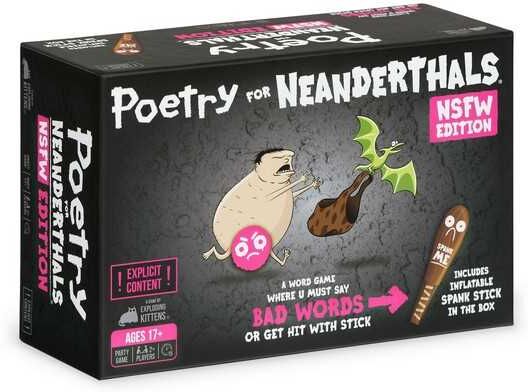
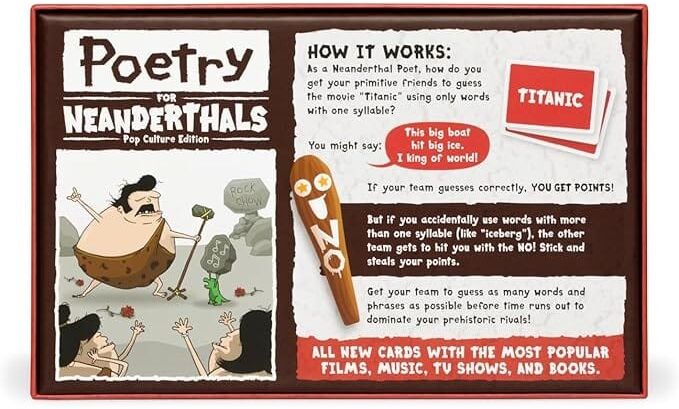
Exploding Kittens Poetry for Neanderthals Party Game - Simple Clues - NEWGet ready for a fun and lively party game with Poetry for Neanderthals from Exploding Kittens. Players take turns giving clues to help their teammates guess words and phrases, but there's a twist: explanations must use simple language. If a player uses a complicated word, the opposing team can call it out with the inflatable No! Stick. This results in a quick-thinking guessing game filled with surprising clues and plenty of laughs. To play, choose a word or phrase for your team to guess, describe it using only simple words, and score points when your team guesses correctly before time runs out. Poetry for Neanderthals is designed for group play and is suitable for parties, family gatherings, and game nights. Its straightforward format makes it easy to start playing, while the word restrictions create a fun challenge for experienced players. Gather your team, keep your clues simple, and enjoy the game.13,49 £*Shipping: 3,95 £Secure redirect to the provider
-
Exploding Kittens Adult Party Game - Poetry for Neanderthals - New EditionGet ready for a unique party game with Poetry for Neanderthals. Players take turns giving clues to help their teammates guess words and phrases, but with a twist: clues must use only single-syllable words. This game combines fast-paced guessing with deliberately challenging wordplay. If a player uses a word with more than one syllable, the opposing team can use the inflatable Spank Stick as part of the game's penalty mechanic. Suitable for social gatherings, this edition contains adult-themed content and is intended for adult players. It's a boxed tabletop game for group play, perfect for a fun night in with friends.17,59 £*Shipping: 3,95 £Secure redirect to the provider
-
Were Neanderthals smarter or dumber than modern humans?
It is difficult to definitively say whether Neanderthals were smarter or dumber than modern humans. Neanderthals had larger brains than modern humans, which could suggest they had comparable or even superior cognitive abilities. However, modern humans had more advanced tools, art, and social structures, indicating a higher level of cognitive complexity. Overall, it is more accurate to say that Neanderthals had different cognitive abilities suited to their environment, rather than being inherently smarter or dumber than modern humans. **
-
Could Neanderthals speak?
There is ongoing debate among scientists about whether Neanderthals had the ability to speak. Some researchers believe that Neanderthals had the physical capability for speech based on the structure of their vocal tract, while others argue that there is not enough evidence to definitively prove they had a complex language like modern humans. Recent studies suggest that Neanderthals may have had the capacity for some form of vocal communication, but the extent and complexity of their language abilities remain uncertain. **
-
Should Neanderthals be gendered?
No, Neanderthals should not be gendered as there is limited evidence to support the idea that they had distinct gender roles or identities similar to modern humans. Assigning gender to Neanderthals based on limited archaeological evidence could perpetuate stereotypes and assumptions about gender roles in prehistoric societies. It is more accurate and respectful to refer to Neanderthals based on their biological sex rather than imposing modern concepts of gender onto them. **
-
Are there still Neanderthals?
No, there are no longer any living Neanderthals. Neanderthals were an ancient human species that lived in Europe and parts of Asia until about 40,000 years ago. They are believed to have gone extinct, possibly due to competition with modern humans or environmental changes. However, some people of non-African descent carry a small amount of Neanderthal DNA in their genomes, as a result of interbreeding between Neanderthals and early modern humans. **
Similar search terms for Neanderthals
-
Microsoft System Center Virtual Machine Endpoint Configuration Manager GLOBALSystem Center Virtual Machine Endpoint Configuration Manager (SCVMM and SCCM for short) is actually a combination of two separate tools from Microsoft's System Center suite, used for managing virtualized environments and deploying/managing devices. Here's a breakdown: System Center Virtual Machine Manager (SCVMM): This tool focuses on managing virtual machines (VMs) within your datacenter. It allows you to: Provision and deploy VMs: Create new VMs, configure them, and deploy them to your chosen hypervisor (like Hyper-V or VMware). Manage VM lifecycle: Perform operations like starting, stopping, migrating, and cloning VMs. Automate VM tasks: Set up automated workflows for VM provisioning, deployment, and management. Monitor VM health: Keep track of VM performance and resource usage. Microsoft Endpoint Configuration Manager (SCCM): This tool, now part of the Endpoint Manager suite, focuses on managing devices (desktops, laptops, servers) on your network. It allows you to: Deploy operating systems and applications: Remotely install Windows or other OSes and applications on your devices. Patch management: Automatically deploy security patches and updates to keep your devices secure. Inventory and asset management: Track hardware and software inventory across your devices. Remote control: Access and control devices remotely for troubleshooting purposes. While they are separate tools, they can be used together for a more comprehensive management solution. For instance, you can use SCVMM to provision and deploy VMs with SCCM pre-installed for easier device management. Here are some additional points to consider: Combined Name: Since SCCM is now part of Endpoint Manager, the full name might not be commonly used anymore. You might just hear them referred to individually or as "System Center suite". Licensing: Both SCVMM and SCCM require separate licensing for managing servers and devices. If you're looking to manage virtual environments and deploy/manage devices within your organization, then understanding the capabilities of SCVMM and SCCM can be helpful.83,52 £*Shipping: 0,00 £Secure redirect to the provider
-
Microsoft System Center Virtual Machine 2022 Manager Server GLOBALMicrosoft System Center Virtual Machine Manager (SCVMM) 2022 Manager Server is a tool designed for managing and deploying virtualized data centers. It's part of the wider System Center suite which offers a range of applications for private and hybrid cloud infrastructure management. Here's a breakdown of what SCVMM 2022 Manager Server does: Manages Virtual Environments: SCVMM excels at managing virtual environments built on Microsoft Hyper-V and even VMware vSphere hypervisors. This allows you to control virtual machines (VMs) across different platforms from a single interface. Provisioning and Deployment: SCVMM simplifies VM provisioning and deployment. You can create VMs, configure settings, and deploy them to hosts efficiently. Monitoring and Automation: The server offers performance monitoring for VMs and the virtual infrastructure. You can also automate tasks like VM provisioning, migration, and disaster recovery. Scalability and Security: SCVMM is designed to handle large-scale virtual environments with features for capacity planning and resource optimization. Security is also a focus, with role-based access control to manage user permissions. Some key features of SCVMM 2022 Manager Server include: Support for Latest Technologies: Manages Azure Stack HCI clusters and integrates with Azure cloud services. Improved Scalability: Supports up to 64 virtual networks for Windows Server 2019 and later. Enhanced Security: Offers more secure options like Smart Card login and improved integration with System Center Operations Manager (SCOM). VMware Support: Manages VMs running on VMware vSphere 7.0 and ESXi 7.0. Here are some additional points to consider: SCVMM 2022 Manager Server requires a separate SQL Server database for storing configuration information. There are system requirements for hardware, software, and supported server versions to run SCVMM effectively. Microsoft provides resources and documentation for installation, configuration, and management of SCVMM 2022 https://learn.microsoft.com/en-us/system-center/vmm/whats-new-in-vmm?view=sc-vmm-2022 . Overall, Microsoft System Center Virtual Machine Manager 2022 Manager Server is a powerful tool for managing and automating virtualized data centers built on Hyper-V and VMware vSphere. It offers features for provisioning, deployment, monitoring, security, and scalability, making it a valuable asset for organizations with complex virtual environments.203,78 £*Shipping: 0,00 £Secure redirect to the provider
-
Microsoft System Center Virtual Machine 2022 Operations Manager Server GLOBALMicrosoft System Center Virtual Machine Manager (VMM) 2022 and Operations Manager (SCOM) 2022 are actually two separate products within the Microsoft System Center suite, but they can be integrated to work together. Here's a breakdown of each: Microsoft System Center Virtual Machine Manager (VMM) 2022: Manages Hyper-V virtualization environments, allowing you to provision, deploy, and manage virtual machines (VMs) at scale. Supports creating and managing virtual networks, storage, and security for your VMs. Integrates with Azure Stack HCI for managing hyper-converged infrastructure deployments. Microsoft System Center Operations Manager (SCOM) 2022: Focuses on monitoring the health and performance of your IT infrastructure, including physical and virtual servers, applications, and network devices. Provides real-time monitoring and alerts you to potential issues. Offers tools for troubleshooting and analyzing performance data. Integration between VMM and SCOM: You can integrate VMM with SCOM to monitor the health and performance of your VMs managed by VMM. This allows you to get a unified view of your entire IT infrastructure, including both physical and virtual resources. Requires SCOM to be running on a supported version, typically System Center 2022. In summary: Microsoft System Center Virtual Machine Manager 2022 Operations Manager Server doesn't refer to a single product, but rather two separate tools within System Center that can be used together. VMM manages your virtual machines, while SCOM monitors the health of your entire IT infrastructure, including VMs managed by VMM.83,52 £*Shipping: 0,00 £Secure redirect to the provider
-
Microsoft System Center Virtual Machine 2022 Service Manager Server GLOBALMicrosoft System Center Service Manager Server: IT service management (ITSM) tool for managing service requests, incidents, and problems within your IT infrastructure. Can be integrated with VMM to manage service requests related to virtual machines, like provisioning or troubleshooting. Provides features for tracking incidents, approvals, and workflows for IT service management. Together: VMM manages the technical aspects of virtual machines. Service Manager provides a framework for managing service requests and incidents related to those virtual machines. Here are some resources for further reading: System Center Virtual Machine Manager: https://learn.microsoft.com/en-us/system-center/vmm/whats-new-in-vmm?view=sc-vmm-2022 What's new in System Center Virtual Machine Manager: https://learn.microsoft.com/en-us/system-center/vmm/whats-new-in-vmm?view=sc-vmm-2022 Install Service Manager on virtual machines: https://learn.microsoft.com/en-us/system-center/scsm/install-sm-vms?view=sc-sm-2022167,03 £*Shipping: 0,00 £Secure redirect to the provider
-
Are Neanderthals our ancestors?
Neanderthals are not direct ancestors of modern humans, but they are our close relatives. Both Neanderthals and modern humans share a common ancestor that lived around 600,000 years ago. Neanderthals and modern humans coexisted for a period of time, and there is evidence of interbreeding between the two groups. Today, most people of non-African descent have a small percentage of Neanderthal DNA in their genome. **
-
What is the connection between Neanderthals and the Ice Age?
Neanderthals were a species of early humans that lived during the Ice Age, which lasted from about 2.6 million years ago to 11,700 years ago. They were well adapted to the cold, harsh conditions of the Ice Age, with their stocky build and large noses that helped them warm and humidify the cold, dry air. Neanderthals were skilled hunters and used tools to survive in the challenging environment of the Ice Age. Their ability to thrive in such extreme conditions is a testament to their resilience and adaptability as a species. **
-
Where did the Neanderthals live?
Neanderthals lived in Europe and parts of western Asia, primarily during the Pleistocene epoch. **
-
What did Neanderthals look like?
Neanderthals were a species of ancient humans who lived in Europe and parts of Asia. They were similar in height to modern humans, but had a more robust build with shorter limbs. They had a large, broad nose, prominent brow ridges, and a sloping forehead. Their bodies were adapted to cold climates, with stocky builds and wide pelvises. Neanderthals also had a larger brain size than modern humans. **
* All prices are inclusive of VAT and, if applicable, plus shipping costs. The offer information is based on the details provided by the respective shop and is updated through automated processes. Real-time updates do not occur, so deviations can occur in individual cases. ** Note: Parts of this content were created by AI.