Buy ymy.eu ?
We are moving the project
ymy.eu .
Are you interested in purchasing the domain
ymy.eu ?
domain@kv-gmbh.de · 0541-91531010
Buy ymy.eu ?
When do you conjugate "avoir"?
The verb "avoir" is conjugated when talking about possession or to form compound tenses such as the passé composé. In these cases, "avoir" is conjugated according to the subject of the sentence. For example, "J'ai un chat" (I have a cat) or "Nous avons mangé" (We have eaten). **
How do you conjugate falloir?
The verb "falloir" is an impersonal verb, meaning it is only used in the third person singular. It is conjugated as "il faut" in the present tense, "il fallait" in the imperfect tense, and "il faudra" in the future tense. There is no need to conjugate it for different subjects, as it always remains in the third person singular form. **


Similar search terms for Conjugate
Top-Angebote
Products related to Conjugate:
-
Tiny Tots Teens Trends Nostalgic Transparent Electronic Pets, Pixel Funny Virtual Cyber Digital Toy Keychain 5Bring back the charm of childhood with these Transparent Electronic Pets! Perfect for both kids and adults, this nostalgic virtual pet game brings fun pixel play and digital memories in a small, portable keychain size. With 168 pets to choose from,...23,97 $*Shipping: 0,00 $Secure redirect to the provider
-
Uplift Essentials Serene Motion Virtual Aquarium Lamp Serene Motion Virtual Aquarium Lamp"Bring the soothing magic of the underwater world to your tabletop with the Serene Motion Virtual Aquarium Lamp. This highdefinition desktop aquarium decorative light uses advanced ""movingpicture"" technology to create a mesmerizing, continuous swim..."82,97 $*Shipping: 0,00 $Secure redirect to the provider
-
Uplift Essentials Virtual Motion Ocean Aquarium Lamp Virtual Motion Ocean Aquarium Lamp"Experience the tranquil beauty of the deep blue without the maintenance of a real tank with the Virtual Motion Ocean Aquarium Lamp. This creative decorative piece uses highdefinition ""moving picture"" technology to simulate a vibrant tropical reef,..."79,97 $*Shipping: 0,00 $Secure redirect to the provider
-
Fusion Finds Smart Card Tracker For Android Find Hub Network With Global Item Tracking 1 whiteKeep important belongings easier to locate with this smart card tracker designed for Android devices. It connects with the Androidbased Find Hub tracker network to help locate misplaced personal items through your phone. Global positioning support...59,97 $*Shipping: 0,00 $Secure redirect to the provider




-
How do you conjugate French adjectives?
In French, adjectives must agree in gender (masculine or feminine) and number (singular or plural) with the noun they modify. To conjugate a French adjective, you need to add the appropriate ending to match the gender and number of the noun it describes. For example, to make the adjective "petit" (small) agree with a masculine singular noun, you would use "petit." But if the noun is feminine singular, you would use "petite." And for a masculine plural noun, you would use "petits," and for a feminine plural noun, you would use "petites." **
-
How do you conjugate in Hebrew?
In Hebrew, verbs are conjugated based on the subject of the sentence and the tense of the action. There are different conjugation patterns for each tense (past, present, future) and for each subject (I, you, he/she/it, we, you all, they). The verb root remains the same, but the conjugation changes to match the subject and tense. Additionally, Hebrew verbs also change based on gender and number of the subject. Learning the conjugation patterns and practicing with different verbs is essential for mastering Hebrew verb conjugation. **
-
How do you conjugate in French?
In French, verbs are conjugated to match the subject of the sentence, including the person (I, you, he/she, we, they) and the tense (present, past, future, etc.). To conjugate a regular verb in the present tense, you remove the infinitive ending (-er, -ir, -re) and add the appropriate ending for the subject (je, tu, il/elle, nous, vous, ils/elles). For example, for the verb "parler" (to speak), you would conjugate it as "je parle" (I speak), "tu parles" (you speak), "il/elle parle" (he/she speaks), "nous parlons" (we speak), "vous parlez" (you speak), "ils/elles parlent" (they speak). Irregular verbs have their own unique conjugation patterns that need to be memorized. **
-
Can you help me conjugate avoir?
Sure! The verb "avoir" is conjugated as follows: - J'ai (I have) - Tu as (You have) - Il/Elle/On a (He/She/One has) - Nous avons (We have) - Vous avez (You have) - Ils/Elles ont (They have) **

How do you conjugate "perire" in Latin?
The verb "perire" in Latin is conjugated as follows in the present tense: - I perish: pereo - You perish: peris - He/she/it perishes: perit - We perish: perimus - You (plural) perish: peritis - They perish: pereunt **
How do you conjugate the Passé Composé?
To conjugate the Passé Composé in French, you typically use the auxiliary verb "avoir" or "être" followed by the past participle of the main verb. The choice between "avoir" and "être" depends on the verb being used and whether it is a transitive or intransitive verb. The past participle of regular -er verbs is formed by replacing the -er ending with -é, for -ir verbs you replace the -ir ending with -i, and for -re verbs you replace the -re ending with -u. Irregular verbs have unique past participle forms that need to be memorized. **
Top-Angebote
Products related to Conjugate:
-
Magrathea Publishing The Anthology of Balaji: A Guide to Technology, Truth, and Building the FutureHow do you thrive in an unknown future? When you can’t see past the world we have now, look to visionaries like Balaji Srinivasan. His ideas show us how to build a healthier, brighter, and more technologically-advanced humanity. In The Anthology of Balaji: A Guide to Technology, Truth, and Building the Future, Eric Jorgenson curates a collection of Balaji’s wisdom from his entire career. In “Technology” you will see how technology shapes our world today and the ways it could shape our future. In “Truth” you learn how to think for yourself through the constant clamor of information and media. Finally, in “Building the Future,” you will learn how to wield Technology and Truth to change your life, change your community, and—maybe—change the future of our species. This guide will help you pick the next great investment, start a billion-dollar company, or even a new country. The Anthology of Balaji helps you visualize and build your brightest future.5,95 £*Shipping: 2,99 £Secure redirect to the provider
-
Inspired Deals Disney Bitzee Digital Pet Carrying Case, Hard Shell Storage Organizer For Interactive Virtual Pets Travel Safe Disney Bitzee Digital Pet Carrying Case, Hard Shell Storage Organizer For Interactive Virtual Pets Travel SafeFall in love with keeping your childs favorite digital companion safe and ready for every adventure. This digital pet storage case is thoughtfully designed for Bitzee and similar interactive toys, giving parents peace of mind and kids the freedom to...39,97 $*Shipping: 0,00 $Secure redirect to the provider
-
Tiny Tots Teens Trends Nostalgic Transparent Electronic Pets, Pixel Funny Virtual Cyber Digital Toy Keychain 5Bring back the charm of childhood with these Transparent Electronic Pets! Perfect for both kids and adults, this nostalgic virtual pet game brings fun pixel play and digital memories in a small, portable keychain size. With 168 pets to choose from,...23,97 $*Shipping: 0,00 $Secure redirect to the provider
-
Uplift Essentials Serene Motion Virtual Aquarium Lamp Serene Motion Virtual Aquarium Lamp"Bring the soothing magic of the underwater world to your tabletop with the Serene Motion Virtual Aquarium Lamp. This highdefinition desktop aquarium decorative light uses advanced ""movingpicture"" technology to create a mesmerizing, continuous swim..."82,97 $*Shipping: 0,00 $Secure redirect to the provider
-
When do you conjugate "avoir"?
The verb "avoir" is conjugated when talking about possession or to form compound tenses such as the passé composé. In these cases, "avoir" is conjugated according to the subject of the sentence. For example, "J'ai un chat" (I have a cat) or "Nous avons mangé" (We have eaten). **
-
How do you conjugate falloir?
The verb "falloir" is an impersonal verb, meaning it is only used in the third person singular. It is conjugated as "il faut" in the present tense, "il fallait" in the imperfect tense, and "il faudra" in the future tense. There is no need to conjugate it for different subjects, as it always remains in the third person singular form. **
-
How do you conjugate French adjectives?
In French, adjectives must agree in gender (masculine or feminine) and number (singular or plural) with the noun they modify. To conjugate a French adjective, you need to add the appropriate ending to match the gender and number of the noun it describes. For example, to make the adjective "petit" (small) agree with a masculine singular noun, you would use "petit." But if the noun is feminine singular, you would use "petite." And for a masculine plural noun, you would use "petits," and for a feminine plural noun, you would use "petites." **
-
How do you conjugate in Hebrew?
In Hebrew, verbs are conjugated based on the subject of the sentence and the tense of the action. There are different conjugation patterns for each tense (past, present, future) and for each subject (I, you, he/she/it, we, you all, they). The verb root remains the same, but the conjugation changes to match the subject and tense. Additionally, Hebrew verbs also change based on gender and number of the subject. Learning the conjugation patterns and practicing with different verbs is essential for mastering Hebrew verb conjugation. **
Similar search terms for Conjugate
-
Uplift Essentials Virtual Motion Ocean Aquarium Lamp Virtual Motion Ocean Aquarium Lamp"Experience the tranquil beauty of the deep blue without the maintenance of a real tank with the Virtual Motion Ocean Aquarium Lamp. This creative decorative piece uses highdefinition ""moving picture"" technology to simulate a vibrant tropical reef,..."79,97 $*Shipping: 0,00 $Secure redirect to the provider
-
Fusion Finds Smart Card Tracker For Android Find Hub Network With Global Item Tracking 1 whiteKeep important belongings easier to locate with this smart card tracker designed for Android devices. It connects with the Androidbased Find Hub tracker network to help locate misplaced personal items through your phone. Global positioning support...59,97 $*Shipping: 0,00 $Secure redirect to the provider
-
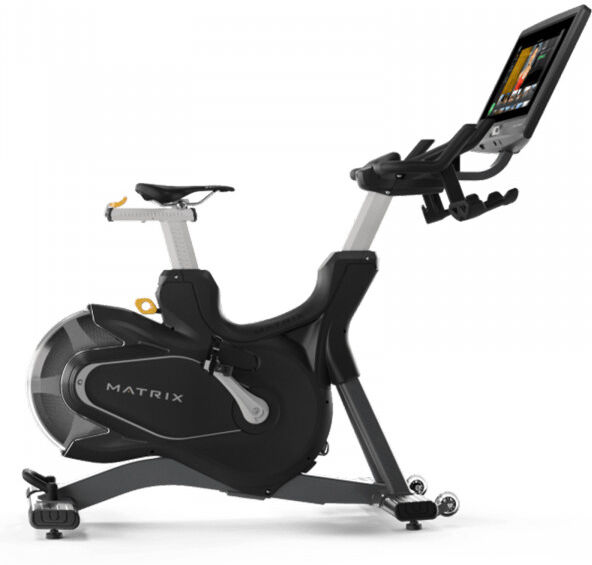
Matrix Virtual Training Cycle CXVTHE MATRIX VIRTUAL TRAINING CYCLE The Matrix Virtual Training Cycle is the purpose built bike for your cardio zone. Whether gym members are challenging themselves with exclusive workouts, enjoying streaming entertainment or taking on an immersive group class, the Virtual Training Cycle will...4794,00 £*Shipping: 0,00 £Secure redirect to the provider
-
Tiny Tots Teens Trends Nostalgic Transparent Electronic Pets, Pixel Funny Virtual Cyber Digital Toy Keychain 11Bring back the charm of childhood with these Transparent Electronic Pets! Perfect for both kids and adults, this nostalgic virtual pet game brings fun pixel play and digital memories in a small, portable keychain size. With 168 pets to choose from,...23,97 $*Shipping: 0,00 $Secure redirect to the provider
-
How do you conjugate in French?
In French, verbs are conjugated to match the subject of the sentence, including the person (I, you, he/she, we, they) and the tense (present, past, future, etc.). To conjugate a regular verb in the present tense, you remove the infinitive ending (-er, -ir, -re) and add the appropriate ending for the subject (je, tu, il/elle, nous, vous, ils/elles). For example, for the verb "parler" (to speak), you would conjugate it as "je parle" (I speak), "tu parles" (you speak), "il/elle parle" (he/she speaks), "nous parlons" (we speak), "vous parlez" (you speak), "ils/elles parlent" (they speak). Irregular verbs have their own unique conjugation patterns that need to be memorized. **
-
Can you help me conjugate avoir?
Sure! The verb "avoir" is conjugated as follows: - J'ai (I have) - Tu as (You have) - Il/Elle/On a (He/She/One has) - Nous avons (We have) - Vous avez (You have) - Ils/Elles ont (They have) **
-
How do you conjugate "perire" in Latin?
The verb "perire" in Latin is conjugated as follows in the present tense: - I perish: pereo - You perish: peris - He/she/it perishes: perit - We perish: perimus - You (plural) perish: peritis - They perish: pereunt **
-
How do you conjugate the Passé Composé?
To conjugate the Passé Composé in French, you typically use the auxiliary verb "avoir" or "être" followed by the past participle of the main verb. The choice between "avoir" and "être" depends on the verb being used and whether it is a transitive or intransitive verb. The past participle of regular -er verbs is formed by replacing the -er ending with -é, for -ir verbs you replace the -ir ending with -i, and for -re verbs you replace the -re ending with -u. Irregular verbs have unique past participle forms that need to be memorized. **
* All prices are inclusive of VAT and, if applicable, plus shipping costs. The offer information is based on the details provided by the respective shop and is updated through automated processes. Real-time updates do not occur, so deviations can occur in individual cases. ** Note: Parts of this content were created by AI.