Buy ymy.eu ?
We are moving the project
ymy.eu .
Are you interested in purchasing the domain
ymy.eu ?
domain@kv-gmbh.de · 0541-91531010
Buy ymy.eu ?
What is the difference between an evaluation conflict, a relationship conflict, and a distribution conflict?
An evaluation conflict arises when there are differing opinions on the quality or effectiveness of work or ideas. This type of conflict is focused on the merit of the work itself. Relationship conflicts, on the other hand, involve interpersonal tensions and issues between individuals, often unrelated to the work itself. Distribution conflicts occur when there are disagreements over the allocation of resources, such as money, time, or responsibilities. Each type of conflict requires different approaches and strategies for resolution. **
What is the difference between interrole conflict and intrarole conflict?
Interrole conflict occurs when the expectations of different roles a person holds are in conflict with each other. For example, a person may experience interrole conflict when the demands of their work role conflict with the demands of their family role. On the other hand, intrarole conflict occurs when the expectations within a single role are in conflict with each other. For instance, a manager may experience intrarole conflict when they are torn between being supportive and being assertive with their team members. In summary, interrole conflict involves conflicts between different roles, while intrarole conflict involves conflicts within a single role. **

Similar search terms for Conflict
Top-Angebote
Products related to Conflict:
-
The 33 Strategies of War by Robert Greene - Profile Books Paperback - Bestselling Guide to Strategy, Power & Conflict for Leaders and StrategistsDiscover the timeless strategies of war with Robert Greene's masterful guide. This UK paperback distils the tactics of history's greatest minds into thirty-three practical strategies, drawing on thousands of years of military history, political manoeuvring and philosophical thought. It is a natural companion to Sun Tzu's The Art of War and a must-read for fans of Greene's The 48 Laws of Power. The book spans world civilisations and synthesises dozens of political, philosophical and religious texts, making it a comprehensive guide to strategy and conflict. With real-world examples drawn from powerful figures including Napoleon, Margaret Thatcher, Shaka the Zulu and Hannibal, each of the thirty-three chapters lays out a distinct strategy to help readers navigate life's challenges.12,49 £*Shipping: 2,99 £Secure redirect to the provider
-
Microsoft System Center Virtual Machine 2022 Manager Server GLOBALMicrosoft System Center Virtual Machine Manager (SCVMM) 2022 Manager Server is a tool designed for managing and deploying virtualized data centers. It's part of the wider System Center suite which offers a range of applications for private and hybrid cloud infrastructure management. Here's a breakdown of what SCVMM 2022 Manager Server does: Manages Virtual Environments: SCVMM excels at managing virtual environments built on Microsoft Hyper-V and even VMware vSphere hypervisors. This allows you to control virtual machines (VMs) across different platforms from a single interface. Provisioning and Deployment: SCVMM simplifies VM provisioning and deployment. You can create VMs, configure settings, and deploy them to hosts efficiently. Monitoring and Automation: The server offers performance monitoring for VMs and the virtual infrastructure. You can also automate tasks like VM provisioning, migration, and disaster recovery. Scalability and Security: SCVMM is designed to handle large-scale virtual environments with features for capacity planning and resource optimization. Security is also a focus, with role-based access control to manage user permissions. Some key features of SCVMM 2022 Manager Server include: Support for Latest Technologies: Manages Azure Stack HCI clusters and integrates with Azure cloud services. Improved Scalability: Supports up to 64 virtual networks for Windows Server 2019 and later. Enhanced Security: Offers more secure options like Smart Card login and improved integration with System Center Operations Manager (SCOM). VMware Support: Manages VMs running on VMware vSphere 7.0 and ESXi 7.0. Here are some additional points to consider: SCVMM 2022 Manager Server requires a separate SQL Server database for storing configuration information. There are system requirements for hardware, software, and supported server versions to run SCVMM effectively. Microsoft provides resources and documentation for installation, configuration, and management of SCVMM 2022 https://learn.microsoft.com/en-us/system-center/vmm/whats-new-in-vmm?view=sc-vmm-2022 . Overall, Microsoft System Center Virtual Machine Manager 2022 Manager Server is a powerful tool for managing and automating virtualized data centers built on Hyper-V and VMware vSphere. It offers features for provisioning, deployment, monitoring, security, and scalability, making it a valuable asset for organizations with complex virtual environments.203,94 £*Shipping: 0,00 £Secure redirect to the provider
-
Microsoft System Center Virtual Machine Endpoint Configuration Manager GLOBALSystem Center Virtual Machine Endpoint Configuration Manager (SCVMM and SCCM for short) is actually a combination of two separate tools from Microsoft's System Center suite, used for managing virtualized environments and deploying/managing devices. Here's a breakdown: System Center Virtual Machine Manager (SCVMM): This tool focuses on managing virtual machines (VMs) within your datacenter. It allows you to: Provision and deploy VMs: Create new VMs, configure them, and deploy them to your chosen hypervisor (like Hyper-V or VMware). Manage VM lifecycle: Perform operations like starting, stopping, migrating, and cloning VMs. Automate VM tasks: Set up automated workflows for VM provisioning, deployment, and management. Monitor VM health: Keep track of VM performance and resource usage. Microsoft Endpoint Configuration Manager (SCCM): This tool, now part of the Endpoint Manager suite, focuses on managing devices (desktops, laptops, servers) on your network. It allows you to: Deploy operating systems and applications: Remotely install Windows or other OSes and applications on your devices. Patch management: Automatically deploy security patches and updates to keep your devices secure. Inventory and asset management: Track hardware and software inventory across your devices. Remote control: Access and control devices remotely for troubleshooting purposes. While they are separate tools, they can be used together for a more comprehensive management solution. For instance, you can use SCVMM to provision and deploy VMs with SCCM pre-installed for easier device management. Here are some additional points to consider: Combined Name: Since SCCM is now part of Endpoint Manager, the full name might not be commonly used anymore. You might just hear them referred to individually or as "System Center suite". Licensing: Both SCVMM and SCCM require separate licensing for managing servers and devices. If you're looking to manage virtual environments and deploy/manage devices within your organization, then understanding the capabilities of SCVMM and SCCM can be helpful.83,58 £*Shipping: 0,00 £Secure redirect to the provider
-
Microsoft System Center Virtual Machine 2022 Operations Manager Server GLOBALMicrosoft System Center Virtual Machine Manager (VMM) 2022 and Operations Manager (SCOM) 2022 are actually two separate products within the Microsoft System Center suite, but they can be integrated to work together. Here's a breakdown of each: Microsoft System Center Virtual Machine Manager (VMM) 2022: Manages Hyper-V virtualization environments, allowing you to provision, deploy, and manage virtual machines (VMs) at scale. Supports creating and managing virtual networks, storage, and security for your VMs. Integrates with Azure Stack HCI for managing hyper-converged infrastructure deployments. Microsoft System Center Operations Manager (SCOM) 2022: Focuses on monitoring the health and performance of your IT infrastructure, including physical and virtual servers, applications, and network devices. Provides real-time monitoring and alerts you to potential issues. Offers tools for troubleshooting and analyzing performance data. Integration between VMM and SCOM: You can integrate VMM with SCOM to monitor the health and performance of your VMs managed by VMM. This allows you to get a unified view of your entire IT infrastructure, including both physical and virtual resources. Requires SCOM to be running on a supported version, typically System Center 2022. In summary: Microsoft System Center Virtual Machine Manager 2022 Operations Manager Server doesn't refer to a single product, but rather two separate tools within System Center that can be used together. VMM manages your virtual machines, while SCOM monitors the health of your entire IT infrastructure, including VMs managed by VMM.83,58 £*Shipping: 0,00 £Secure redirect to the provider


-
What is the difference between a conflict and a social conflict?
A conflict is a general term that refers to any disagreement or struggle between two or more parties. It can be personal, professional, or societal in nature. On the other hand, a social conflict specifically refers to a disagreement or struggle between different social groups or classes within a society. Social conflicts often involve issues related to power, resources, and social inequality, and they can have a significant impact on the functioning of a society as a whole. **
-
What is the difference between an intrarole conflict and an interrole conflict?
Intrarole conflict occurs when an individual experiences conflicting demands within a single role, such as when a manager is torn between two equally important tasks. On the other hand, interrole conflict arises when there are conflicting demands between different roles an individual occupies, like when a person struggles to balance their responsibilities as a parent and as an employee. Essentially, intrarole conflict involves conflicts within a specific role, while interrole conflict involves conflicts between different roles. **
-
What is the connection between the Northern Ireland conflict and religion?
The Northern Ireland conflict has deep roots in religious divisions between the predominantly Protestant Unionists, who want to remain part of the United Kingdom, and the predominantly Catholic Nationalists, who seek a united Ireland. The conflict has been fueled by historical grievances, discrimination, and violence between these two communities, often with religious undertones. The religious divide has been a significant factor in shaping political and social identities in Northern Ireland, and has contributed to the perpetuation of the conflict. Religion has played a central role in shaping the attitudes and allegiances of the two communities, and has been a key factor in the ongoing tensions and divisions in the region. **
-
What is an interrole conflict?
An interrole conflict occurs when an individual experiences conflicting demands or expectations between different roles they hold. This can happen when the expectations of one role clash with the expectations of another role, leading to tension and difficulty in fulfilling both roles effectively. For example, a person may struggle to balance the demands of their work responsibilities with their family obligations, resulting in an interrole conflict. Managing interrole conflicts often requires effective communication, boundary-setting, and prioritization of responsibilities. **


Is the conflict not solvable?
Conflict is often solvable through open communication, compromise, and a willingness to understand the perspectives of all parties involved. By actively listening, seeking common ground, and working towards a mutually beneficial solution, conflicts can be resolved. It may require time, effort, and patience, but with the right approach, most conflicts can be resolved effectively. **
What is a DNS conflict?
A DNS conflict occurs when there are conflicting or incorrect DNS (Domain Name System) records for a domain. This can lead to issues such as websites not loading correctly, emails not being delivered, or other network-related problems. DNS conflicts can arise from misconfigured DNS settings, outdated records, or changes made to DNS records that have not propagated correctly. Resolving DNS conflicts typically involves identifying and correcting the conflicting records to ensure proper domain resolution. **
Top-Angebote
Products related to Conflict:
-
Uplift Essentials 60 Day Calming Pheromone Refill Long Lasting Stress & Conflict Relief For Cats cat TastlessMaintain a peaceful, multicat household with the 60Day Calming Pheromone Refill. This highcapacity refill is specifically formulated to reduce tension, fighting, and territorial conflict among cats. By releasing a constant stream of synthetic...61,97 $*Shipping: 0,00 $Secure redirect to the provider
-
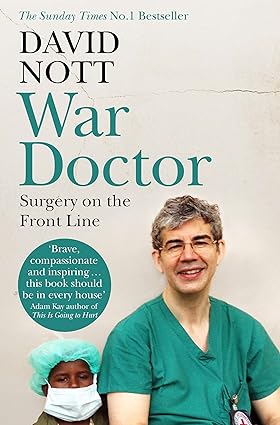
War Doctor: Surgery on the Front Line by David Nott - Paperback Memoir - Frontline Conflict Surgery True Story - PicadorWar Doctor: Surgery on the Front Line is the searing true memoir of David Nott, a surgeon who has spent over twenty-five years volunteering in the world's most dangerous war zones. This paperback account follows Nott from besieged Sarajevo to underground hospitals in Aleppo, revealing the extraordinary skill, courage, and moral weight of operating where help is scarce and danger constant. For more than two and a half decades, David Nott has taken unpaid leave from his NHS post as a general and vascular surgeon to work in some of the planet's most hostile environments. The book traces his journeys through Sarajevo under siege in 1993, rebel-held eastern Aleppo, and a string of conflicts that map the shape of modern warfare. It is essential reading for anyone drawn to real-life stories of resilience, medicine, and conflict.4,99 £*Shipping: 2,99 £Secure redirect to the provider
-
The 33 Strategies of War by Robert Greene - Profile Books Paperback - Bestselling Guide to Strategy, Power & Conflict for Leaders and StrategistsDiscover the timeless strategies of war with Robert Greene's masterful guide. This UK paperback distils the tactics of history's greatest minds into thirty-three practical strategies, drawing on thousands of years of military history, political manoeuvring and philosophical thought. It is a natural companion to Sun Tzu's The Art of War and a must-read for fans of Greene's The 48 Laws of Power. The book spans world civilisations and synthesises dozens of political, philosophical and religious texts, making it a comprehensive guide to strategy and conflict. With real-world examples drawn from powerful figures including Napoleon, Margaret Thatcher, Shaka the Zulu and Hannibal, each of the thirty-three chapters lays out a distinct strategy to help readers navigate life's challenges.12,49 £*Shipping: 2,99 £Secure redirect to the provider
-
Microsoft System Center Virtual Machine 2022 Manager Server GLOBALMicrosoft System Center Virtual Machine Manager (SCVMM) 2022 Manager Server is a tool designed for managing and deploying virtualized data centers. It's part of the wider System Center suite which offers a range of applications for private and hybrid cloud infrastructure management. Here's a breakdown of what SCVMM 2022 Manager Server does: Manages Virtual Environments: SCVMM excels at managing virtual environments built on Microsoft Hyper-V and even VMware vSphere hypervisors. This allows you to control virtual machines (VMs) across different platforms from a single interface. Provisioning and Deployment: SCVMM simplifies VM provisioning and deployment. You can create VMs, configure settings, and deploy them to hosts efficiently. Monitoring and Automation: The server offers performance monitoring for VMs and the virtual infrastructure. You can also automate tasks like VM provisioning, migration, and disaster recovery. Scalability and Security: SCVMM is designed to handle large-scale virtual environments with features for capacity planning and resource optimization. Security is also a focus, with role-based access control to manage user permissions. Some key features of SCVMM 2022 Manager Server include: Support for Latest Technologies: Manages Azure Stack HCI clusters and integrates with Azure cloud services. Improved Scalability: Supports up to 64 virtual networks for Windows Server 2019 and later. Enhanced Security: Offers more secure options like Smart Card login and improved integration with System Center Operations Manager (SCOM). VMware Support: Manages VMs running on VMware vSphere 7.0 and ESXi 7.0. Here are some additional points to consider: SCVMM 2022 Manager Server requires a separate SQL Server database for storing configuration information. There are system requirements for hardware, software, and supported server versions to run SCVMM effectively. Microsoft provides resources and documentation for installation, configuration, and management of SCVMM 2022 https://learn.microsoft.com/en-us/system-center/vmm/whats-new-in-vmm?view=sc-vmm-2022 . Overall, Microsoft System Center Virtual Machine Manager 2022 Manager Server is a powerful tool for managing and automating virtualized data centers built on Hyper-V and VMware vSphere. It offers features for provisioning, deployment, monitoring, security, and scalability, making it a valuable asset for organizations with complex virtual environments.203,94 £*Shipping: 0,00 £Secure redirect to the provider
-
What is the difference between an evaluation conflict, a relationship conflict, and a distribution conflict?
An evaluation conflict arises when there are differing opinions on the quality or effectiveness of work or ideas. This type of conflict is focused on the merit of the work itself. Relationship conflicts, on the other hand, involve interpersonal tensions and issues between individuals, often unrelated to the work itself. Distribution conflicts occur when there are disagreements over the allocation of resources, such as money, time, or responsibilities. Each type of conflict requires different approaches and strategies for resolution. **
-
What is the difference between interrole conflict and intrarole conflict?
Interrole conflict occurs when the expectations of different roles a person holds are in conflict with each other. For example, a person may experience interrole conflict when the demands of their work role conflict with the demands of their family role. On the other hand, intrarole conflict occurs when the expectations within a single role are in conflict with each other. For instance, a manager may experience intrarole conflict when they are torn between being supportive and being assertive with their team members. In summary, interrole conflict involves conflicts between different roles, while intrarole conflict involves conflicts within a single role. **
-
What is the difference between a conflict and a social conflict?
A conflict is a general term that refers to any disagreement or struggle between two or more parties. It can be personal, professional, or societal in nature. On the other hand, a social conflict specifically refers to a disagreement or struggle between different social groups or classes within a society. Social conflicts often involve issues related to power, resources, and social inequality, and they can have a significant impact on the functioning of a society as a whole. **
-
What is the difference between an intrarole conflict and an interrole conflict?
Intrarole conflict occurs when an individual experiences conflicting demands within a single role, such as when a manager is torn between two equally important tasks. On the other hand, interrole conflict arises when there are conflicting demands between different roles an individual occupies, like when a person struggles to balance their responsibilities as a parent and as an employee. Essentially, intrarole conflict involves conflicts within a specific role, while interrole conflict involves conflicts between different roles. **
Similar search terms for Conflict
-
Microsoft System Center Virtual Machine Endpoint Configuration Manager GLOBALSystem Center Virtual Machine Endpoint Configuration Manager (SCVMM and SCCM for short) is actually a combination of two separate tools from Microsoft's System Center suite, used for managing virtualized environments and deploying/managing devices. Here's a breakdown: System Center Virtual Machine Manager (SCVMM): This tool focuses on managing virtual machines (VMs) within your datacenter. It allows you to: Provision and deploy VMs: Create new VMs, configure them, and deploy them to your chosen hypervisor (like Hyper-V or VMware). Manage VM lifecycle: Perform operations like starting, stopping, migrating, and cloning VMs. Automate VM tasks: Set up automated workflows for VM provisioning, deployment, and management. Monitor VM health: Keep track of VM performance and resource usage. Microsoft Endpoint Configuration Manager (SCCM): This tool, now part of the Endpoint Manager suite, focuses on managing devices (desktops, laptops, servers) on your network. It allows you to: Deploy operating systems and applications: Remotely install Windows or other OSes and applications on your devices. Patch management: Automatically deploy security patches and updates to keep your devices secure. Inventory and asset management: Track hardware and software inventory across your devices. Remote control: Access and control devices remotely for troubleshooting purposes. While they are separate tools, they can be used together for a more comprehensive management solution. For instance, you can use SCVMM to provision and deploy VMs with SCCM pre-installed for easier device management. Here are some additional points to consider: Combined Name: Since SCCM is now part of Endpoint Manager, the full name might not be commonly used anymore. You might just hear them referred to individually or as "System Center suite". Licensing: Both SCVMM and SCCM require separate licensing for managing servers and devices. If you're looking to manage virtual environments and deploy/manage devices within your organization, then understanding the capabilities of SCVMM and SCCM can be helpful.83,58 £*Shipping: 0,00 £Secure redirect to the provider
-
Microsoft System Center Virtual Machine 2022 Operations Manager Server GLOBALMicrosoft System Center Virtual Machine Manager (VMM) 2022 and Operations Manager (SCOM) 2022 are actually two separate products within the Microsoft System Center suite, but they can be integrated to work together. Here's a breakdown of each: Microsoft System Center Virtual Machine Manager (VMM) 2022: Manages Hyper-V virtualization environments, allowing you to provision, deploy, and manage virtual machines (VMs) at scale. Supports creating and managing virtual networks, storage, and security for your VMs. Integrates with Azure Stack HCI for managing hyper-converged infrastructure deployments. Microsoft System Center Operations Manager (SCOM) 2022: Focuses on monitoring the health and performance of your IT infrastructure, including physical and virtual servers, applications, and network devices. Provides real-time monitoring and alerts you to potential issues. Offers tools for troubleshooting and analyzing performance data. Integration between VMM and SCOM: You can integrate VMM with SCOM to monitor the health and performance of your VMs managed by VMM. This allows you to get a unified view of your entire IT infrastructure, including both physical and virtual resources. Requires SCOM to be running on a supported version, typically System Center 2022. In summary: Microsoft System Center Virtual Machine Manager 2022 Operations Manager Server doesn't refer to a single product, but rather two separate tools within System Center that can be used together. VMM manages your virtual machines, while SCOM monitors the health of your entire IT infrastructure, including VMs managed by VMM.83,58 £*Shipping: 0,00 £Secure redirect to the provider
-
Microsoft System Center Virtual Machine 2022 Service Manager Server GLOBALMicrosoft System Center Service Manager Server: IT service management (ITSM) tool for managing service requests, incidents, and problems within your IT infrastructure. Can be integrated with VMM to manage service requests related to virtual machines, like provisioning or troubleshooting. Provides features for tracking incidents, approvals, and workflows for IT service management. Together: VMM manages the technical aspects of virtual machines. Service Manager provides a framework for managing service requests and incidents related to those virtual machines. Here are some resources for further reading: System Center Virtual Machine Manager: https://learn.microsoft.com/en-us/system-center/vmm/whats-new-in-vmm?view=sc-vmm-2022 What's new in System Center Virtual Machine Manager: https://learn.microsoft.com/en-us/system-center/vmm/whats-new-in-vmm?view=sc-vmm-2022 Install Service Manager on virtual machines: https://learn.microsoft.com/en-us/system-center/scsm/install-sm-vms?view=sc-sm-2022167,16 £*Shipping: 0,00 £Secure redirect to the provider
-
Uplift Essentials 60 Day Calming Pheromone Refill Long Lasting Stress & Conflict Relief For Cats dog TastelessMaintain a peaceful, multicat household with the 60Day Calming Pheromone Refill. This highcapacity refill is specifically formulated to reduce tension, fighting, and territorial conflict among cats. By releasing a constant stream of synthetic...61,97 $*Shipping: 0,00 $Secure redirect to the provider
-
What is the connection between the Northern Ireland conflict and religion?
The Northern Ireland conflict has deep roots in religious divisions between the predominantly Protestant Unionists, who want to remain part of the United Kingdom, and the predominantly Catholic Nationalists, who seek a united Ireland. The conflict has been fueled by historical grievances, discrimination, and violence between these two communities, often with religious undertones. The religious divide has been a significant factor in shaping political and social identities in Northern Ireland, and has contributed to the perpetuation of the conflict. Religion has played a central role in shaping the attitudes and allegiances of the two communities, and has been a key factor in the ongoing tensions and divisions in the region. **
-
What is an interrole conflict?
An interrole conflict occurs when an individual experiences conflicting demands or expectations between different roles they hold. This can happen when the expectations of one role clash with the expectations of another role, leading to tension and difficulty in fulfilling both roles effectively. For example, a person may struggle to balance the demands of their work responsibilities with their family obligations, resulting in an interrole conflict. Managing interrole conflicts often requires effective communication, boundary-setting, and prioritization of responsibilities. **
-
Is the conflict not solvable?
Conflict is often solvable through open communication, compromise, and a willingness to understand the perspectives of all parties involved. By actively listening, seeking common ground, and working towards a mutually beneficial solution, conflicts can be resolved. It may require time, effort, and patience, but with the right approach, most conflicts can be resolved effectively. **
-
What is a DNS conflict?
A DNS conflict occurs when there are conflicting or incorrect DNS (Domain Name System) records for a domain. This can lead to issues such as websites not loading correctly, emails not being delivered, or other network-related problems. DNS conflicts can arise from misconfigured DNS settings, outdated records, or changes made to DNS records that have not propagated correctly. Resolving DNS conflicts typically involves identifying and correcting the conflicting records to ensure proper domain resolution. **
* All prices are inclusive of VAT and, if applicable, plus shipping costs. The offer information is based on the details provided by the respective shop and is updated through automated processes. Real-time updates do not occur, so deviations can occur in individual cases. ** Note: Parts of this content were created by AI.